Generated image 1 (8)
Why manufacturers end up with four systems and no answers

Most businesses didn't choose this. They added a channel.

Direct B2B came first, then distributors, and now dealers. Each one arrived with its own pricing logic, its own way of taking an order, and its own workaround. So a system built to run one commercial model is now running four, and the spreadsheets in between are holding the whole thing together.

That layer is the problem. Not the ERP, not the CRM, not the team. The spreadsheets, the shared inboxes and the one person who knows how dealer pricing really works are what happens when nobody ever redesigned the architecture to match the way the business now sells.

You're probably in this position if:
  • Margin by channel is assembled manually, so pricing decisions are made on a picture that is already out of date

  • Dealer pricing logic sits with one person rather than in a system, and nobody has quantified what that exposure is worth

  • Quotes leave the business without finance visibility, and the discount floor is a convention rather than a control

  • Your ERP is the system of record for stock and your CRM is the system of record for the relationship, and no one owns the contract between them

  • Service has no view of the installed base, so warranty and parts revenue is guesswork rather than a forecast

  • Integrations were built by contractors who have since moved on, and nobody will sign off a change to them

  • Self Service has been on the roadmap for two years because there is no agreed answer on where it would live

It's what happens when four commercial models get run on a system built for one.

Screenshot 2026-09-06 at 5.35.01 PM
Screenshot 2026-09-06 at 5.35.07 PM
That's why we extend HubSpot, rather than just implement it

Configuration is enough when a business sells one way to one kind of customer. Pipelines, workflows, campaigns.

It isn't enough when direct sales, distributors and dealers all run through the same environment, when the ERP holds the truth about stock and the CRM holds the truth about the relationship, and when three channels each need their own pricing logic without three separate systems to hold it.

So we do two things.

We architect HubSpot around the way you actually sell. The data model, the channel logic, the integrations that keep ERP and finance in step.

And where the commercial reality goes past what HubSpot delivers natively, we extend it with CommercePro, our HubSpot-native commerce layer. Built as a product, maintained through HubSpot's release cycle, supported by us.


Proven across manufacturing and engineering
mastercraft
Manufacturing
Mastercraft Kitchens
Website Transformation on HubSpot CMS

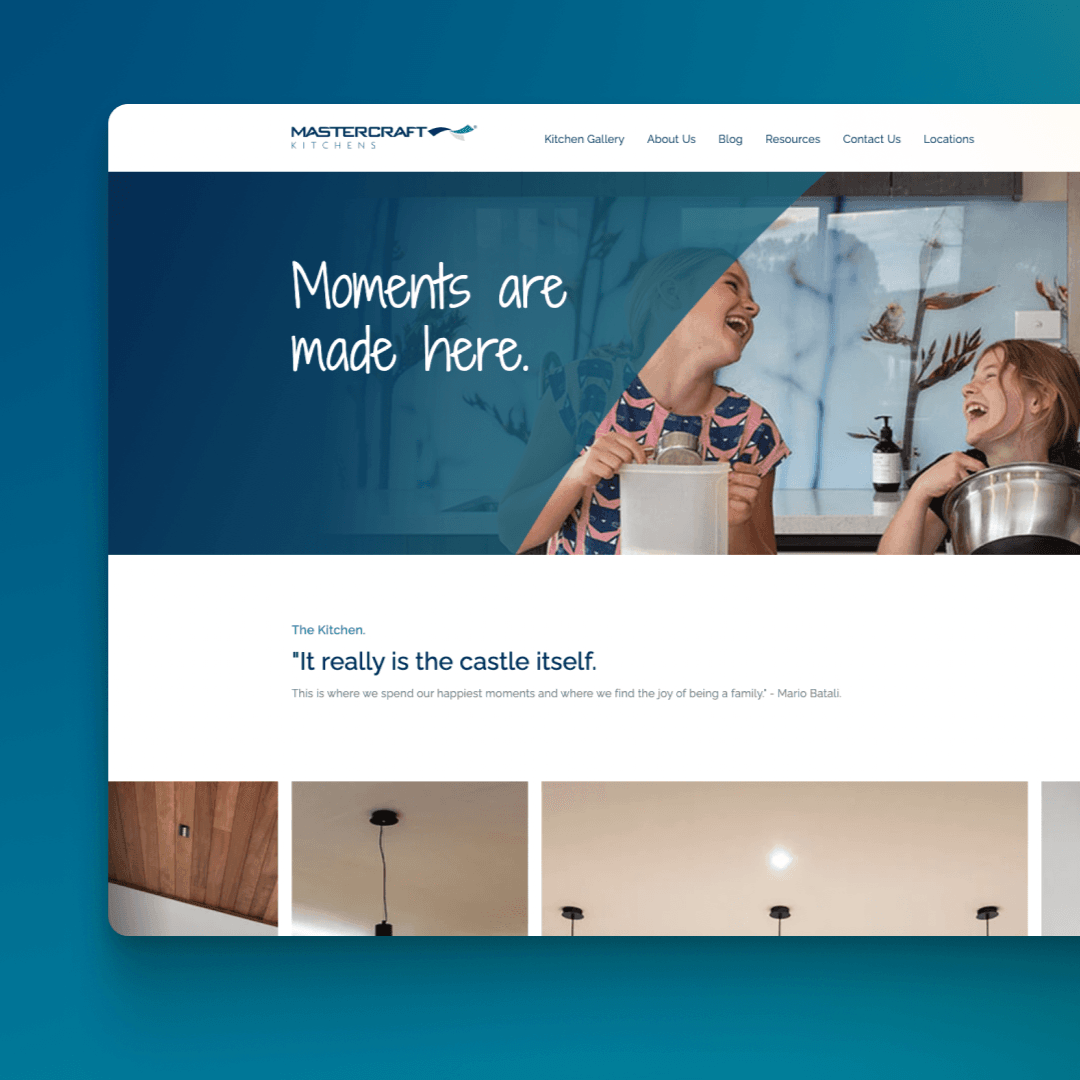
"Engaging Partners developed a comprehensive solution by leveraging the HubSpot CMS platform. The website was redesigned to provide a modern and authentic representation of the Mastercraft brand. The Kitchen Gallery, strategically placed on the home page and main navigation, presented a visually captivating display of kitchen designs."

- Matt Cannon, Head of Marketing

ASMUSS
Engineering Distribution
Asmuss Group
Marketing & CRM Transformation

"Engaging Partners has exceeded expectations and I am such an advocate. We were stunned with how fast we could get to where we are today - and the fact we didn't have to constantly tweak and change things that they presented to us is exemplary of the quality of work they provide and their ability to understand a client's needs."

- Rafaela Mendes, Marketing Manager

ziwi
Pet Food Manufacturing 
ZIWI
HubSpot Optimisation & Data Restructure

"Engaging Partners has helped ZIWI optimise HubSpot, creating a more streamlined and integrated user experience for our teams, while a data restructure project has dramatically improved our ability to report meaningful customer and consumer insights to our leaders and teams. Today, ZIWI is using HubSpot in a more efficient, effective way, adding more value to our business."

- Dorita Munro, Head of External Relations & Communication

What changes for your business with Engaging Partners

CRM Architecture

Multi-Channel CRM Architecture

Direct B2B, distributor, dealer and D2C channels all run through a single HubSpot environment, with the data model, lifecycle stages and pipeline architecture configured to reflect how each channel actually operates.

Portals

Dealer and Distributor Portals

Self-service ordering, account history, pricing, contract documents, marketing collateral and support requests - running natively inside HubSpot via CommercePro. Channel partners get the experience they expect, while your team gets the visibility it has never had.

Commerce

B2B eCommerce and Complex Pricing

Multi-tier pricing, customer-specific pricing, bulk ordering, quote-to-order workflows, approvals and invoice payments through Stripe, Xero or QuickBooks. Built natively inside HubSpot - not bolted on alongside it.

Automation

Quote-to-Cash Automation

Deal-based workflows that move opportunities from quote through approval, order, invoice and payment without falling out of the system between stages. Sales gets visibility, finance gets clean data and customers get a faster experience.

Customer Service

Customer Service Architecture

Service Hub configured for warranty claims, technical support, returns and field service, with full purchase history, contract terms and product data attached to every ticket. Service teams stop asking customers questions the system already knows the answer to.

Marketing

Marketing Aligned to Long B2B Cycles

Account-based marketing, multi-stakeholder nurture, technical content distribution and lead-to-customer attribution that respects six to 18-month engineering buying cycles instead of treating every download like a same-quarter opportunity.

Websites

Website Transformation on HubSpot CMS

Modern, fast and conversion-optimised websites built on HubSpot Content Hub, with the integrations, product data feeds and personalisation capabilities manufacturers actually need. Mastercraft Kitchens is the reference build.

Integrations

Integrations with the Systems That Matter

ERPs including SAP, NetSuite, Microsoft Dynamics and Pronto; finance platforms including Xero, QuickBooks and MYOB; plus product information management, logistics, warranty and field service tools - connected through API-led architecture that holds up.

Migration

Migrations from Legacy CRMs

Structured migrations from Salesforce, Microsoft Dynamics, Sage, Sugar and homegrown systems, executed without losing pipeline data, customer history or critical channel relationships.

Trusted by leading manufacturing and engineering businesses
Mastercraft Kitchens Asmuss Group Donovan Group ZIWI Synlait CADPRO Compac J.A. Russell Elaman Rata

Why HubSpot?
Why CommercePro?

01 Why HubSpot

One platform your team can actually run

CRM, marketing, service, content, automation, reporting and AI already live together. HubSpot gives manufacturers a strong operational core without the cost and specialist dependency of a traditional enterprise CRM.

02 Why CommercePro

Because manufacturing doesn’t stop at CRM

Dealer ordering, customer-specific pricing, B2B commerce, subscriptions and quote-to-order workflows go beyond what HubSpot delivers natively. CommercePro adds that capability inside HubSpot rather than introducing another disconnected platform.

03 Why they work together

Commerce without another system to reconcile

Orders, customers, deals, service history, marketing activity and payments remain connected to the same customer record. Your commercial operation gets broader without your stack getting messier.

Where HubSpot stops, we extend it.
We don’t replace it.

Native, extended, connected

What we build, and what we extend

01 / Native

What HubSpot gives you out of the box

A full customer platform your own team can run, without a specialist on retainer to change a form.

  • CRM
  • CMS
  • Marketing
  • Service
  • Automation
  • Reporting
  • AI
02 / Extended

Where we extend it with CommercePro

Manufacturing commerce goes past what any CRM ships with. CommercePro adds it natively, inside HubSpot, not alongside it.

  • Dealer ordering portals
  • Multi-tier pricing
  • Customer-specific pricing
  • Quote-to-order
  • Subscription supply
  • Invoice payments
  • B2B and D2C checkout
03 / Connected

Where it meets the systems you can’t replace

Your ERP isn’t going anywhere. We connect it properly instead of exporting around it.

  • SAP
  • NetSuite
  • Microsoft Dynamics
  • Pronto
  • Xero
  • QuickBooks
  • MYOB
  • PIM
  • Logistics
  • Field service
04 / Architected

How it’s built to match your channels

The part most implementations skip. The data model decides whether the reporting still works two years from now.

  • Multi-channel pipelines
  • Dealer and distributor records
  • Channel lifecycle stages
  • Product data model
  • Pricing logic
  • Permissions
  • Migration

How we work with manufacturers.

Robust and considered, our five-step methodology bends to your needs but won't break - from structured discovery through to ongoing enhancement across the full member lifecycle.

  1. Step 01

    Discovery & Scoping

    We kick off every engagement by identifying key stakeholders, understanding expectations, and establishing scope and objectives — captured in a Solution Requirements Document with budget, timeline, risk and quality strategies and a communication plan.

  2. Step 02

    Solution Design & Specification

    We design the automated and manual processes that will achieve your project goals, then specify functional deliverables and system configuration for each part of the solution - aligned to your objectives.

  3. Step 03

    Configuration & Development

    Your team executes the plan, configuring and developing the deliverables scoped in the SRD - with tight performance tracking, control of scope, costs, quality and risk, and clear regular communication throughout.

  4. Step 04

    Deployment & Optimisation

    We deploy, optimise and test the solution, ensuring it meets the needs and expectations of your members and internal teams - including iterative post-deployment changes and stakeholder training and support.

  5. Step 05

    Evaluation & Enhancement

    We evaluate project outcomes and processes, identify lessons learned, and seek stakeholder feedback - identifying incremental improvements and assessing the value of enhancements for future Discovery + Scoping phases.

Frequently Asked Questions

FAQ – Engaging Partners
  • For most mid-market and enterprise manufacturers, yes — particularly where you need marketing, sales, service, commerce and channel management to operate from a single source of truth. HubSpot's gap historically was complex B2B commerce and dealer portals, which is exactly where CommercePro closes the loop without requiring a third-party platform or custom build.

  • HubSpot is increasingly competitive in mid-market manufacturing environments, particularly where consolidation, ease of use and faster time-to-value matter. Salesforce and Dynamics still win at the very high end where deeply customised engineering CPQ, complex compensation engines or specialised manufacturing modules are non-negotiable. We're frequently brought into evaluations specifically to architect the operational depth prospects worry HubSpot lacks — and most of the time, properly configured HubSpot plus CommercePro covers the requirements.

  • Yes. We integrate HubSpot with major manufacturing ERPs including SAP, NetSuite, Microsoft Dynamics, Pronto, Sage and Acumatica, as well as the finance systems that sit alongside them, including Xero, QuickBooks and MYOB. Integration architecture and migration scoping are core to how we run a project.

  • Yes. We've built dealer ordering portals, distributor self-service, channel marketing enablement and account-based pricing for manufacturers running channel networks across multiple regions. CommercePro powers the transactional layer, while HubSpot powers everything around it.

  • Yes, and increasingly that's the default architecture we recommend for manufacturers expanding into D2C. CommercePro lets you run B2B and D2C commerce inside the same HubSpot environment, with shared customer data, unified marketing and a single source of truth for every channel.

  • Yes. A meaningful portion of our manufacturing work is structured migration from Salesforce, Microsoft Dynamics, Sage and homegrown systems. We've built a CRM migration practice specifically for moving complex commercial operations onto HubSpot without losing pipeline data, customer history or channel relationships.

  • A focused implementation covering CRM, marketing automation and baseline ERP integration typically runs for eight to 16 weeks. A full transformation including dealer portals, B2B eCommerce, service workflows and multi-system integration typically runs for four to six months. We scope accurately during structured discovery before any commitment is made.

  • We're based in Auckland and Sydney, with active manufacturing clients across New Zealand, Australia, the UK and the US. ZIWI alone exports to 35 markets globally, all managed through the HubSpot environment we built. Manufacturing work travels well because the underlying commercial and operational patterns are remarkably consistent across markets.

Get architectural clarity
before you commit

Whether you're modernising legacy CRM and ERP environments, expanding into D2C, or evaluating HubSpot against Salesforce or Microsoft Dynamics, we'll provide the operational confidence manufacturing and engineering leaders need before making a transformation decision.